

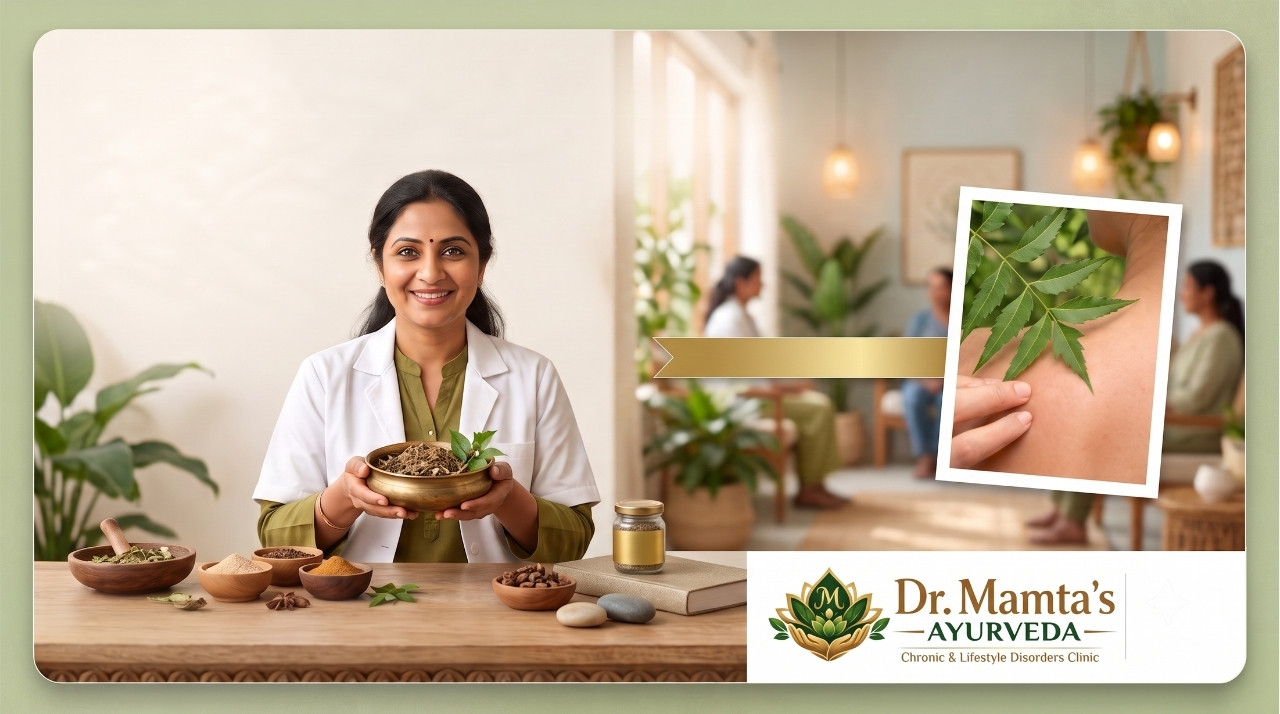
Psoriasis and Chronic Skin Disorders:
My Ayurvedic Approach
By Dr Mamta Chandan
Ayurveda Physician
Psoriasis is not just a skin problem. It is a long-term inflammatory condition that can cause redness, scaling, itching, dryness and thick plaques. It can also affect sleep, confidence, social life and emotional wellbeing.
In my 35 years of clinical practice, I have treated more than 100 chronic skin cases. One thing I have learned repeatedly is that two patients with the same diagnosis may need very different treatment.
That is why I do not treat psoriasis only by its name. I first try to understand the person, the pattern of the disease, its triggers, digestion, stress, sleep, diet, previous treatment and the nature of the skin lesions.
Psoriasis is Common Worldwide:
Psoriasis occurs across the world, although the frequency varies from one country to another. In many Western populations, it affects more than 2% of adults, while reported rates are lower in several Asian populations.
Indian studies have reported prevalence broadly between about 0.44% and 2.8%, although the true burden may vary between regions. In the WHO ICD-11 classification, psoriasis is listed under EA90: Psoriasis. It includes plaque psoriasis, guttate psoriasis, pustular psoriasis, erythrodermic psoriasis and other forms.
This modern classification helps us understand the type of psoriasis, while Ayurveda adds another layer by examining the individual pattern of disease.
How Ayurveda Looks at Psoriasis:
In Ayurveda, psoriasis is often compared with Ekakushtha, a classical skin disorder described in ancient texts. Acharya Charaka describes features such as large areas of skin involvement and scaling resembling fish scales:
अस्वेदनं महावास्तु यन्मत्स्यशकलोपमम्।
Charaka Samhita, Chikitsa Sthana 7/21
The description is relevant because scaling is one of the major features of psoriasis.
However, I do not label every chronic skin patient as Ekakushtha. Ayurveda describes several types of skin disorders, and proper clinical assessment is important before planning treatment.
I Look Beyond the Skin:
When a patient comes to me with psoriasis or another chronic skin condition, I do not focus only on the visible patches.
I also ask about:
• digestion and appetite
• bowel habits
• sleep
• stress
• food habits
• seasonal flare-ups
• previous medicines
• weight and metabolism
• family history
• itching, burning or bleeding
• dryness or oozing
• duration of the disease
This gives a much clearer picture of what may be contributing to repeated flare-ups.
Treatment Has to Be Individual:
Some patients mainly have dryness and scaling. Others have redness and burning. Some have thick plaques with severe itching. In some patients, stress plays a major role. In others, digestion or food habits may be contributing. This is why I do not believe in giving the same medicine to every psoriasis patient. The treatment plan may include dietary correction, herbal medicines, external applications, Panchakarma in selected patients and regular follow-up.
Shodhana in Selected Chronic Cases
For some long-standing and difficult cases, I may advise Shodhana, or supervised cleansing treatment, before starting longer-term medicines.
This is not necessary for everyone.
The patient’s age, strength, disease severity, associated illnesses and previous treatment must be considered before deciding whether a Panchakarma procedure is suitable.
Depending on the case, treatment may include preparatory measures followed by Virechana, Vamana or another appropriate therapy.
The purpose is not simply to "detox". It is to prepare the body so that the next stage of treatment can work more effectively.
What I Do After Shodhana:
The treatment after Shodhana is extremely important.
Once the patient has recovered from the cleansing procedure and normal diet has been restored, I reassess the skin condition and start the next phase.
This may include:
• internal herbal medicines
• local herbal applications
• diet correction
• treatment for digestion
• stress and sleep management
• regular follow-up
• measures to reduce recurrence
In selected patients, I also use Jalaukavacharana, or medicinal leech therapy, after Shodhana.
Jalauka (Leech) Therapy in Selected Patients
Jalaukavacharana is a traditional Ayurvedic procedure using medicinal leeches.
I use it only in carefully selected chronic skin patients, particularly where there is marked redness, inflammation or certain local lesions.
It should never be tried at home. I am using at our clinic in Mahali. The patient must be examined properly before the procedure. Haemoglobin level, bleeding tendency, medicines being taken and general health all need to be considered.
Proper hygiene, correct use of medicinal leeches and post-procedure care are essential. It is useful in some patients, but it is not suitable for everyone.
I Prepare My Herbal Medicines Myself:
One important part of my clinical practice is that I prepare my own herbal medicines for my patients. I do not believe that every chronic skin patient should be given the same ready-made combination.
I select herbs according to the individual patient’s condition, symptoms, digestion, age, strength and previous treatment response. For example, a patient with severe dryness may need a different combination from someone with intense redness and burning. A patient with poor digestion may need additional support before stronger skin-focused medicines are started. This personalised preparation is an important part of how I practice Ayurveda.
Diet Matters:
Medicines alone are often not enough if the same dietary triggers continue every day.
I usually advise patients to keep their food simple and easy to digest. Depending on the individual case, I may ask them to reduce excessive sour, fermented, very spicy, processed or heavy foods.
I do not give every patient the same diet chart. The food plan should match the person, the season and the pattern of the disease.
Stress Can Worsen the Skin
Many patients clearly notice that their skin becomes worse during periods of stress.
This is very common.
Poor sleep, anxiety, overwork and emotional stress can all contribute to flare-ups.
Simple measures such as regular sleep, walking, yoga, breathing practices and reducing mental overload can support the treatment.
What 35 Years of Practice Has Taught Me :
After treating more than 100 chronic skin cases, my main conclusion is simple:
There is no single medicine for every psoriasis patient.
The treatment has to be planned around the individual.
My approach usually includes:
proper diagnosis → finding triggers → improving digestion and diet → Shodhana where needed → Jalauka therapy in selected cases → personally prepared herbal medicines → local care → regular follow-up
The goal is not only to reduce the visible patches. It is also to understand why the condition keeps returning and how the patient can remain stable for a longer period.
A Note for Patients:
If you are suffering from psoriasis, chronic itching, repeated scaling, eczema-like lesions or another persistent skin disorder, avoid long-term self-medication.
Different skin diseases can look similar, and the correct diagnosis is important before starting treatment.
You can consult me with your previous reports, prescriptions and treatment history. I assess each case individually before deciding on herbal medicines, Panchakarma, Jalauka therapy or another suitable approach.
Dr Mamta Chandan
Ayurveda Physician
My aim is simple: treat the patient, not just the skin patch.

Your Path to Clearer Skin
Living with psoriasis can feel like an endless battle against your own body. By viewing your symptoms through the lens of Ayurveda, you can stop fighting your skin and start listening to it. By making mindful changes to your diet, managing your stress, and utilizing the power of natural herbs, you can coax your doshas back into balance and support your body’s innate ability to heal.